
Research
Three research pillars drive our work: transducer design, sensing and actuation systems, and robotic and wearable platforms. All three rest on a common foundation: sensing and actuation technologies co-designed with mechanics, compliant materials, and efficient computing, then integrated at the system level. We build on that foundation to create intelligent and robotic systems that work seamlessly in the real world — unmanned vehicles that navigate and coordinate autonomously, biomedical wearables that diagnose and monitor disease, and haptic interfaces that deliver rich tactile feedback.
How can we leverage architecture, materials, and fabrication to maximize transducer performance, especially for platforms with tight constraints on form factor and resources?
How can we distribute large numbers of sensor and actuator arrays across large areas with efficient sampling and actuation schemes?
How can we integrate sensing and actuation systems into robots and wearables to improve how they interact with people and the world at large?
Transducer Design
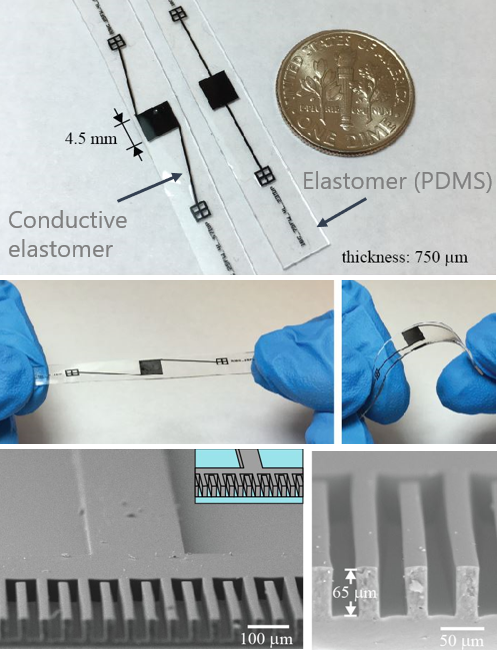
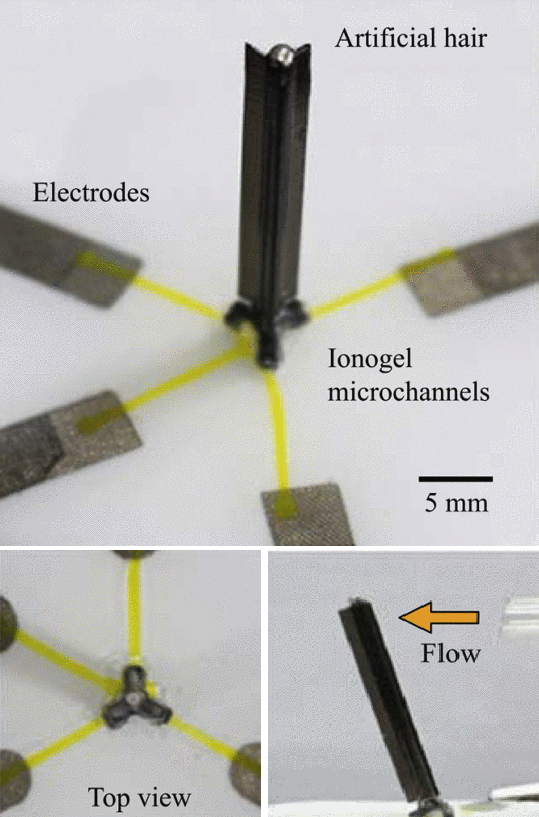
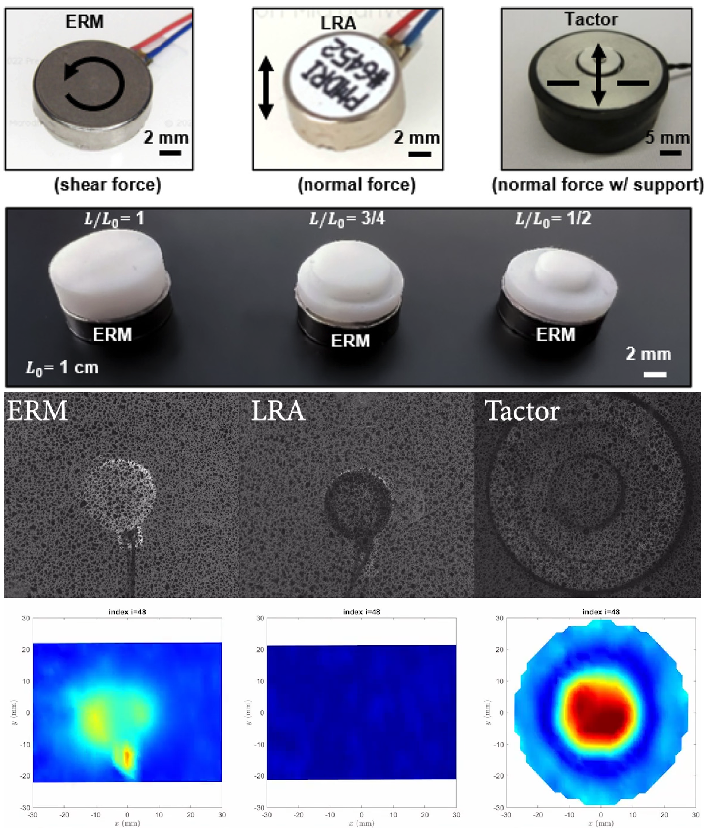
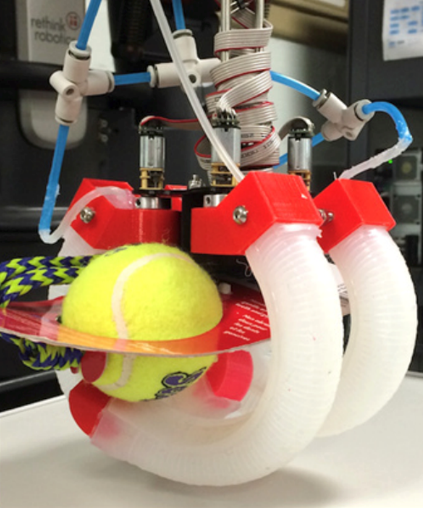
A soft transducer’s capability comes as much from its geometry, material, and mechanism as from the transduction principle itself. That leaves an unusually wide design space with no single obvious path through it. We search that space by borrowing mechanisms from biology, from microsystems, and from integrated circuits, grounding every choice in the two things that decide what can actually be built: the physics governing the device, and the fabrication process available to make it.
Current directions:
- Mechanisms for soft transducers. On the sensing side, devices that report several stimuli at once or stay quiet until a threshold is crossed, rebuilding the encoding strategies that mechanoreceptors use in living organisms. On the actuation side, the same question in reverse: what structure turns a simple, uniform input into a shaped and programmable motion.
- Physics-informed machine learning for design-space search. Multiphysics models of the coupled electromechanical behavior inside a soft device set the boundaries of what its response can be. Trained into fast surrogate models, they let us search the design space itself, optimizing geometry, material, and mechanism at once rather than one variant at a time, and eventually inverting the problem: starting from a target response and asking what device produces it.
- Manufacturing methodologies. Fabrication sets the edge of the design space, so we work on that edge directly, developing new processes that move it outward instead of designing within it. One current effort is a multilayer micromachining process that extends pop-up MEMS assembly to larger areas at low cost, opening MEMS mechanisms to devices that need area rather than precision.
Sensing and Actuation Systems
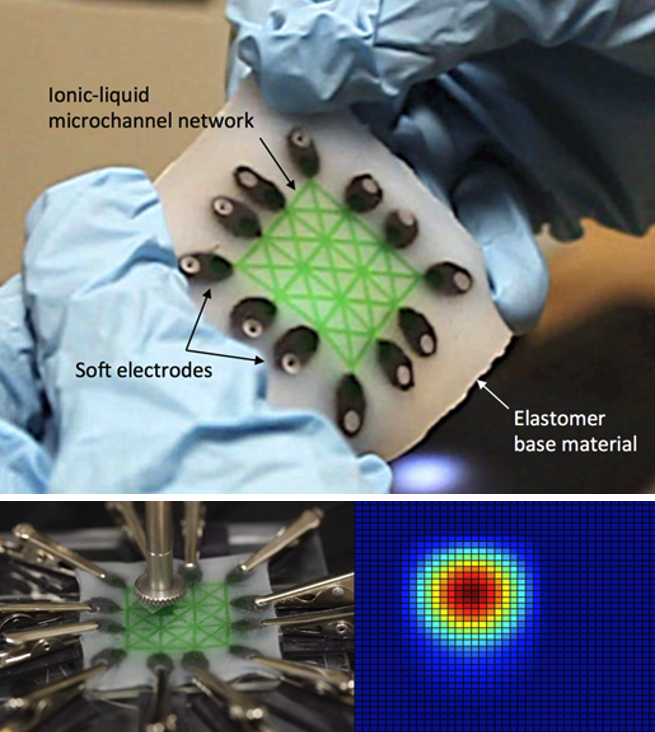
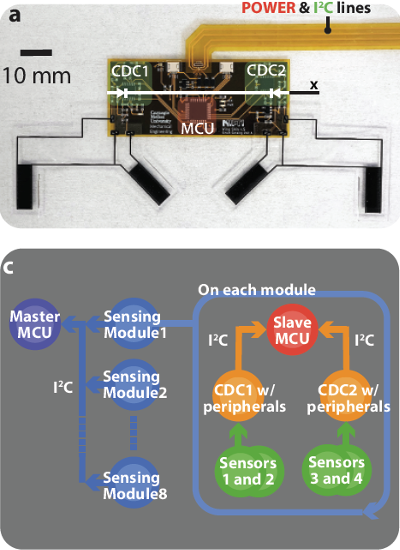
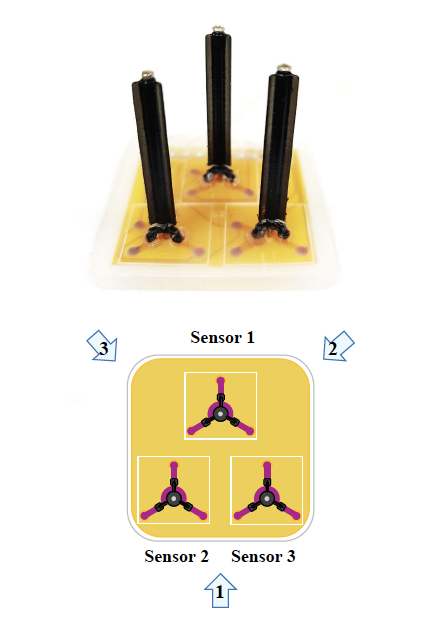
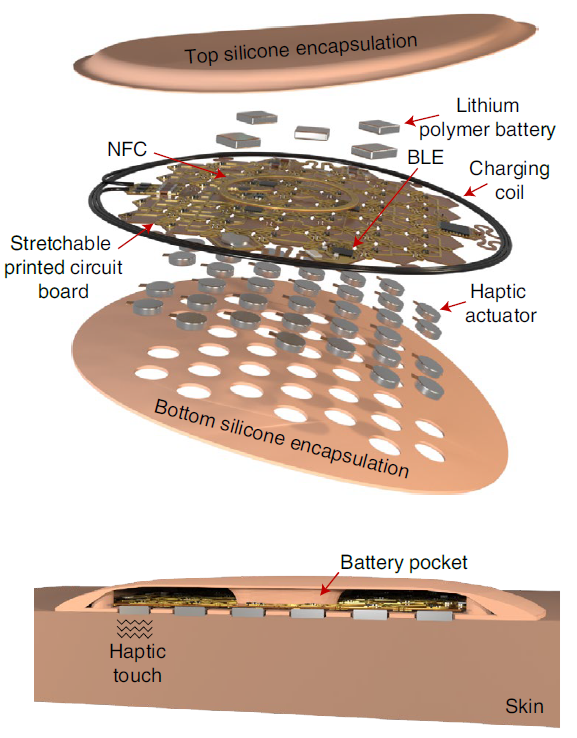
A working prototype is not yet a system. Going from one soft transducer to dozens of them on a moving robot raises problems the device itself never poses: reading many channels without losing fidelity on any of them, driving as many actuators without exceeding the power the platform can supply, and turning raw streams into signals a controller can act on. We build the embedded hardware and firmware that close that gap, and we build them modular, so each system becomes a foundation for the next rather than a one-off rig.
Current directions:
- Modular sensing and actuation architectures. Hardware and firmware designed so that adding a channel, sensing or actuating, does not mean redesigning the system. Driving is the harder half: a haptic actuator array needs addressing, power delivery, and drive electronics that scale with channel count, not simply a larger amplifier. Each build is meant to outlive the experiment it was made for and serve as a platform others can extend.
- Event-triggered sampling. The same principle our threshold-based transducers use at the device level, applied to the system: sampling on change rather than on a fixed clock, so a system with many channels spends computation and power only where something is actually happening. This is what keeps large sensor arrays viable on platforms that cannot carry a full data pipeline.
- Interfaces to the rest of the stack. Sensor fusion and ROS interfaces that turn raw channels into something a controller, a planner, or a learning system can consume without needing to know how the hardware underneath works. A sensing and actuation system that cannot be read by the software already running on the robot is not yet integrated.
Robotic and Wearable Platforms
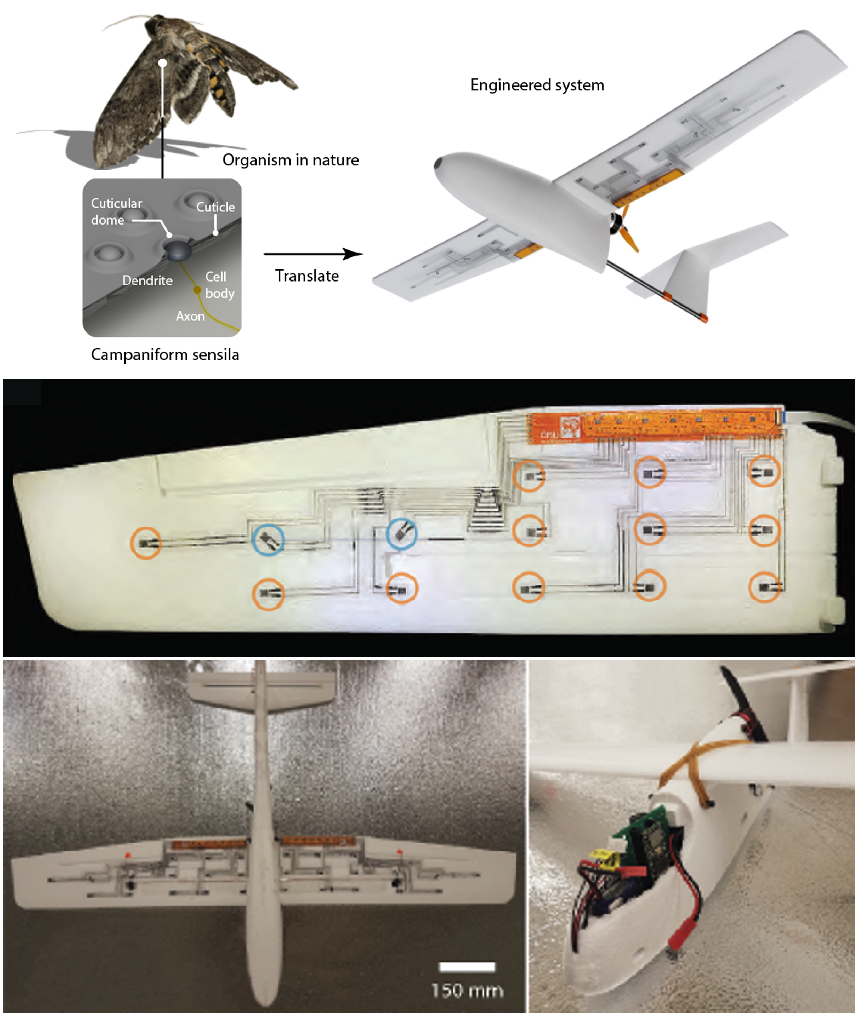
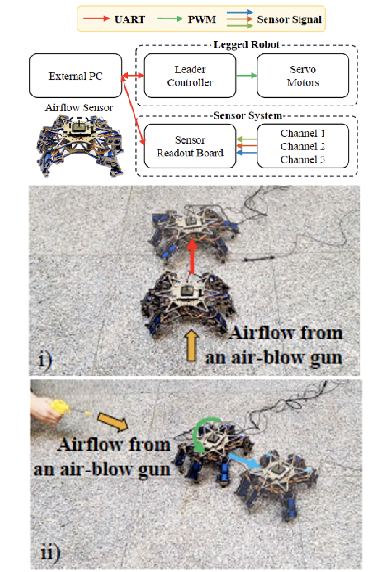
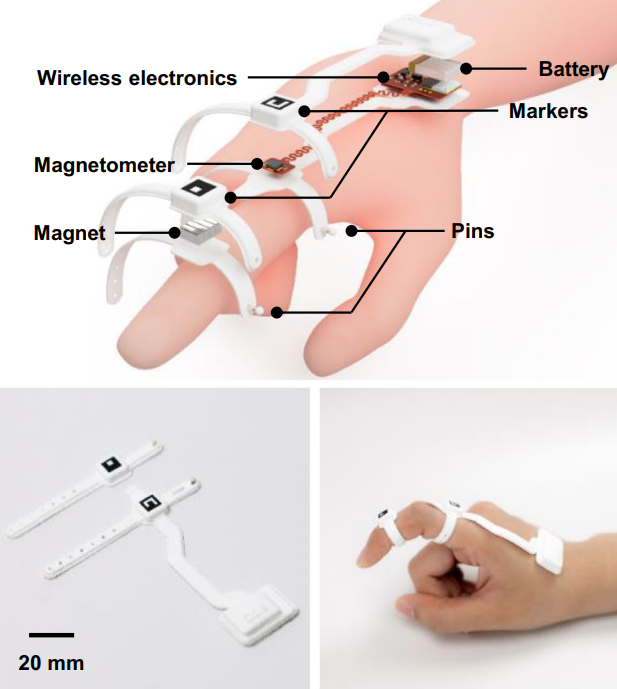
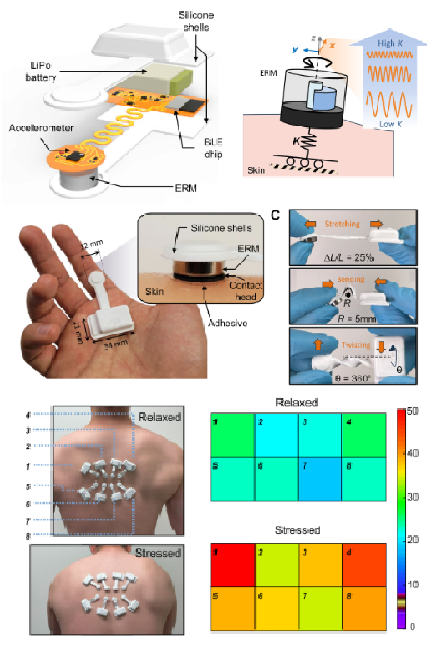
A platform is whatever carries the transducers and has to keep working while it moves. For us that has meant machines and people alike: vehicles that sense the air and the ground they move through, and wearables that sit on skin and follow a joint through its range. The demands turn out to be similar. Both need sensing distributed across a body that keeps moving, computing that fits on the platform rather than beside it, and a loop that closes back to whoever is acting, whether that is a controller or a person.
Current directions:
- Distributed sensing for autonomous platforms. Soft sensors spread across the surfaces of vehicles and robots, so a platform can feel the flow around it and its own deformation and use that in control directly, rather than inferring it from instrumentation mounted somewhere else.
- Skin-interfaced wearables for healthcare. Soft devices that track joint motion and tissue properties on the body, paired with the phones and tablets people already carry, so diagnosis, monitoring, and rehabilitation can happen outside the clinic and over time rather than at single visits.
- Closed-loop haptic interaction. Actuator arrays that sense the contact they create while they create it, so a platform delivers the touch it intended instead of only stimulating.